CARLA 2021 archive

Guadalajara, MexicoOctober 6 to 8, 2021Virtual edition

CARLA 2021, Latin America High Performance Computing Conference

Speakers

Workshop Invited Speakers

Research and operational experience from the seven CARLA 2021 workshops.

The workshop invited speakers brought research and operational experience from institutions across Latin America, Europe and the United States.

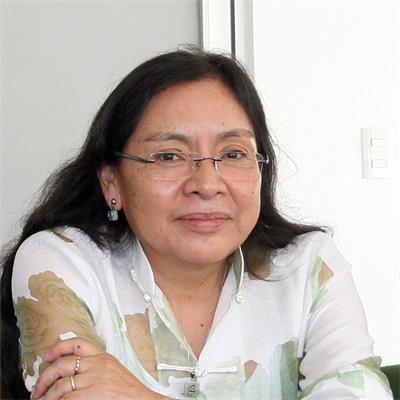
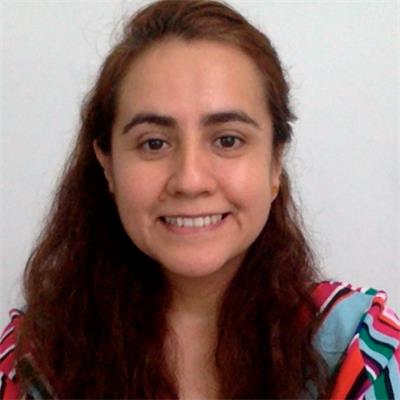
Portrait of Karen Salomé Caballero Mora

Karen Salomé Caballero Mora

Autonomous University of Chiapas, Mexico

Conference session

Born in Mexico City, Karen Salomé Caballero Mora studied physics at the Faculty of Sciences at UNAM. She then studied for a doctorate in natural sciences with a specialty in astroparticles at the Karlsruhe Institute of Technology in Germany, with research on the composition of ultra energetic cosmic rays. She did postdoctoral stays at Pennsylvania State University, the University of Santiago de Compostela and CINVESTAV Zacatenco, where she joined the HAWC experiment. Her work covers cosmic rays, gamma rays, the search for new gamma ray sources in the galactic plane and dark matter.

She joined the Faculty of Sciences in Physics and Mathematics of the Autonomous University of Chiapas in 2014, where she has also worked on the MATHUSLA proposal at CERN and on the LAGO and Escaramujo experiments. Her work requires high performance computing, and she has been strongly involved in the creation of the Regional Laboratory for High Performance Computing, LARCAD, at UNACH. She currently holds several scientific and academic management positions. In 2014 she was one of the winners of the For Women in Science award from L'Oréal, AMC and CONALMEX.

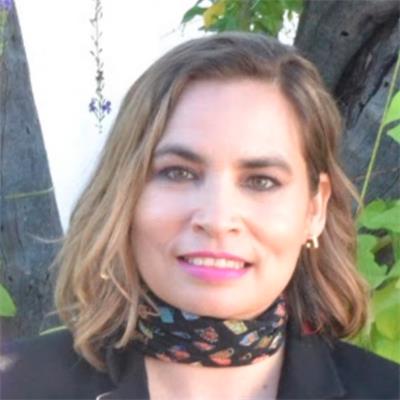
Portrait of Judith Percino Zacarías

Judith Percino Zacarías

Autonomous University of Puebla, Mexico

Conference session

Judith Percino Zacarías completed a doctorate in chemistry of macromolecules in 1991 at the Kazakh Institute of Sciences. Since 1992 she has been part of the Autonomous University of Puebla, creating the Group of Polymers. To date she has 112 indexed publications and 1,079 citations and has trained 33 thesis students: 20 bachelor's, 7 master's, 6 doctoral and 5 postdoctoral researchers. Several institutional and federal research projects have been developed. The most significant is the project for the creation of the National Laboratory of Southeast Mexico Supercomputer at BUAP in 2015, contributing to the development of the scientific community at BUAP and higher education institutions in Mexico.

With the infrastructure of the laboratory, projects have been developed such as theoretical characterization and experimental physicochemical properties and molecular structure of compounds of low and high molecular weight, and supramolecular computational studies of derivatives of unsaturated acrylonitrile. These projects included collaboration with Subbiah Thamotharan of SASTRA Deemed University and Perumal Venkatesan of Bharathidasan University.

Portrait of Raquel Torres Peralta

Raquel Torres Peralta

University of Sonora, Mexico

Conference session

Raquel Torres Peralta is a professor and researcher in the Department of Industrial Engineering and coordinator of the Information Systems Engineering career at the University of Sonora, with a doctorate in computer science from the University of Arizona. She specializes in machine learning and data mining and currently supports projects aimed at preventive medicine and health.

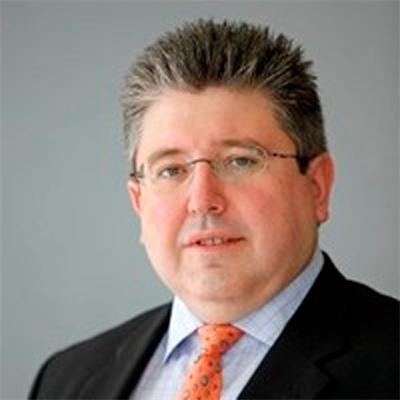
Portrait of Jose Maria Cela

Jose Maria Cela

Barcelona Supercomputing Center, Spain

Conference session

Jose Maria Cela is a PhD in telecommunication engineering from the Universitat Politècnica de Catalunya and a professor of computer architecture at the same university since 1996. He has been director of the Department of Computer Applications in Science and Engineering at the Barcelona Supercomputing Center since 2007. He has directed more than 25 research and development projects, has published over 40 articles and has participated in almost 100 international conferences. His research is related to numerical simulation in engineering and high performance computing. In recent years, his research has focused on the energy sector. He directs the joint research center Repsol BSC. He is also responsible for the macro research project with Iberdrola renewables and several other projects in the field of fusion energy.

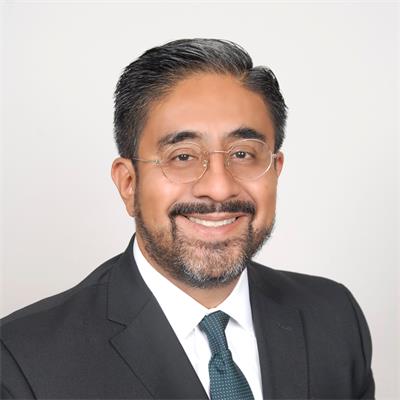
Portrait of Salvador Elías Venegas Andraca

Salvador Elías Venegas Andraca

Tecnológico de Monterrey, Mexico

Conference session

Salvador E. Venegas Andraca is a professor of computer science and head of the Quantum Information Processing group at Tecnológico de Monterrey and the founding director of the Unconventional Computing Lab. He holds a DPhil in physics from the University of Oxford and an MSc by research in computer vision, also from Oxford, as well as an MBA with honours and a BSc with honours in digital electronics and computer science from Tecnológico de Monterrey. He has been a visiting professor at Harvard University, the National Autonomous University of Mexico and Yucatan University.

His work focuses on understanding the scientific and societal aspects of computation and on contributing to the economic development of modern society based on science and technology. He is a leading scientist in quantum walks, a cofounder of the field of quantum image processing, and his research interests include quantum algorithms and the algorithmic analysis of NP hard and NP complete problems. He is the author of Quantum Walks for Computer Scientists, the first book written on quantum walks, and coauthor of Quantum Image Processing, the first book fully focused on storing, processing and retrieving visual information using quantum mechanical systems. He has published more than 50 scientific papers with more than two thousand citations.

He has received several awards, including membership in the Quantum Computing Network of the World Economic Forum, fellow of the Mexican Academy of Sciences, senior member of the Association for Computing Machinery, fellow of the Mexican Academy of Computer Science, member of the Mexican Society for the Public Communication of Science, SNI 2 in physics and mathematics, the Oxford University Chancellor Fund Award and a silver medal at the British Council International Students Awards.

Portrait of Luis Eliécer Cadenas

Luis Eliécer Cadenas

RedCLARA, Chile

Conference session

Luis Eliécer Cadenas has been executive director of RedCLARA since 2017. Born in Venezuela, he has almost 30 years of experience in information technologies and telecommunications. He has led academic network initiatives across Latin America, including the National Academic Network of Venezuela, REACCIUN, and the Latin American Research Network Association. Read the full profile on the Panel 1 page.

Portrait of Pedro Vieira Alberto

Pedro Vieira Alberto

University of Coimbra, Portugal

Conference session

Pedro Alberto is a physics professor at the University of Coimbra with research interests in relativistic quantum mechanics, computational physics and physics simulations for teaching. He has been head of the Advanced Computing Laboratory of the University of Coimbra since its inauguration in 2002. He has been involved in several HPC activities, including cluster management and procurement, outreach and dissemination, organization of HPC training events, advanced computer classes, and national and international research projects related to HPC, including RISC projects for HPC collaboration between Europe and Latin America. He has been coordinator of the Portuguese participation in PRACE since its beginning in 2008 and is the Portuguese delegate to the PRACE Council. He is the task leader for training and skills development within the EuroHPC EuroCC project, Portuguese branch.

Portrait of Marcela Mercado Reyes

Marcela Mercado Reyes

National Institute of Health, Colombia

Conference session

Marcela Mercado Reyes is a bacteriologist with a master's degree in clinical epidemiology and a specialist in field epidemiology. She is an associate researcher with more than 20 years of experience in basic and applied research in public and private institutions. She has been a researcher in projects related to vector borne diseases, evaluation of health technologies, analysis of diagnostic tests, maternal and perinatal health and vaccine effectiveness, among others, with more than 40 publications in indexed journals.

She has teaching experience in undergraduate and postgraduate university programs. During her career she has conducted research projects related to emerging infections caused by Aedes mosquitoes in Colombia, such as intensified surveillance of pregnant women with Zika, evolutionary analysis of viral genome sequences to establish the determinants of Zika virus transmission in Colombia, and determination of the characteristics associated with mortality due to Chikungunya virus. She is currently the public health research director at the Colombian National Institute of Health. During the SARS CoV 2 pandemic she led the seroprevalence study in the country, the development of the ELIPSE COL test for COVID 19 and the National SARS CoV 2 Genomic Characterization Program.

Antonio Russo

École Polytechnique Fédérale de Lausanne, Switzerland

Conference session

Antonio Russo received his master's degree in 2015 from the Conservatoire National des Arts et Métiers in France, in computer applications and computer software engineering. He has vast experience in large systems deployment, from migration of whole municipalities to free and open source software to Top500 clusters. He worked for academia at CONICET in Argentina, and he is currently an HPC systems specialist at the École Polytechnique Fédérale de Lausanne.

Portrait of Eliu Huerta

Eliu Huerta

Argonne National Laboratory, USA

Conference session

Dr. Eliu Huerta is lead for translational AI and a computational scientist in the Data Science and Learning Division at Argonne National Laboratory. He is also a CASE senior scientist affiliated with the Department of Computer Science at the University of Chicago. He is a theoretical astrophysicist, mathematician and computer scientist with broad research interests. He has done pioneering work at the interface of physics inspired AI, scientific visualization and extreme scale computing for multimessenger astrophysics, cosmology, observational astronomy and large scale simulations that describe multiscale and multiphysics phenomena.

Huerta received a Master of Advanced Study in applied mathematics and theoretical physics and a PhD in theoretical astrophysics from the University of Cambridge. He leads several NSF and DOE funded interdisciplinary and multiinstitutional projects that focus on disruptive AI applications and advanced computing for big data experiments. He enjoys translational AI research across disciplines, industry, finance and technology. His h index is 73 and he has more than 50,000 citations.